FILE No.18Unsolved
A heavy bronze statue was stolen from a harbor warehouse.
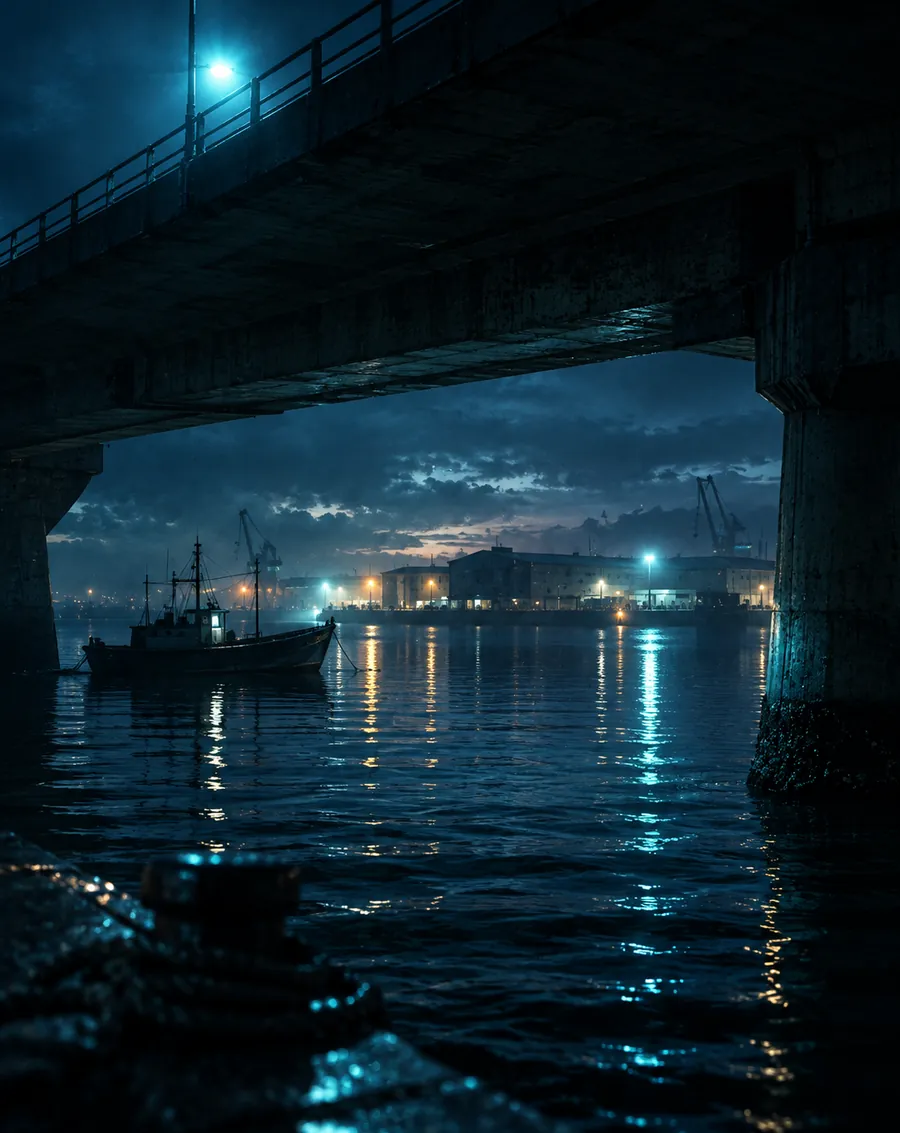
The next morning a small boat that had been tied at the warehouse landing was found in an inlet downstream. The stolen statue was loaded on it.
The only way from the landing to the inlet is under a low stone bridge.
Kishi, the boat’s owner, told the police: "Last night I tried to set out in the empty boat, but its roof was going to catch on the bridge, so I turned back. How did it get through with a statue loaded?"
The tide was the same when Kishi turned back and when the boat passed under the bridge. There was no sign that the bridge or the boat’s roof had been altered.
What made it possible to pass under the bridge the empty boat could not?
If you get stuck, open the hints one at a time, in order.
Neither the tide nor the shape of the bridge or roof changed.
Compare the white part of the hull and the waterline in the photos.
The empty boat and the boat when found carry different things. How does that weight affect the boat?
What made it possible to pass under the bridge the empty boat could not?
Choose the answer closest to the truth.
The statue
The answer is “the statue.”
Loading the heavy statue made the hull sink deeper into the water. The roof lowered with the hull, so the boat could pass under the bridge it could not pass empty. Comparing the photos, the white part of the hull is hidden below the waterline in the boat loaded with the statue. Even with the same tide, the position of the water relative to the hull changed. People tend to think "if it can’t pass empty, it surely can’t pass loaded," but the added weight opened a gap under the bridge. The roof was not removed, and no one waited for the tide to go out.
You assume that if an empty boat cannot pass, a loaded one certainly cannot. You overlook that added weight lowers the whole boat.
The cases on this site are fictional puzzles created for entertainment. Any resemblance to real people, organizations or events is coincidental.
© Unsolved Files