FILE No.174Unsolved
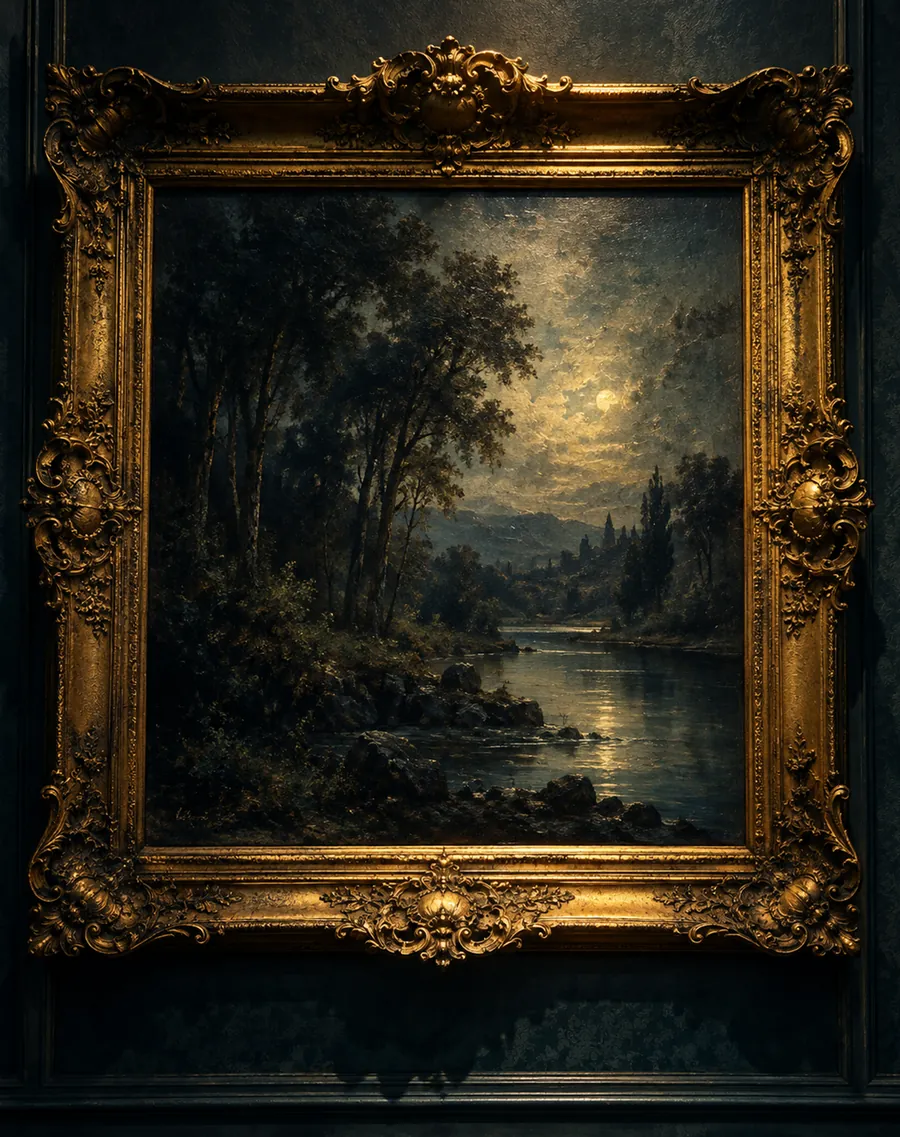
On a desk in the corner of a painting that a museum exhibited as a landscape by a 19th-century master, a drink in a PET bottle is painted. PET bottles came into practical use as drink containers in the 1970s or later.
According to technical analysis, the paint of the bottle is in the same layer as its surroundings, with the same fine cracks running continuously, and there is no sign of having been added later. In addition, a synthetic pigment that has been made only since the 1950s was detected in the red of the bottle's label. The same pigment was detected in the blue sky layer as well. The photograph has not been altered.
What can be said for certain about this painting?
If you get stuck, open the hints one at a time, in order.
Is the bottle area something added later?
From what period on does the red paint of the label date?
Is the same pigment in other layers too?
What can be said for certain about this painting?
Choose the answer closest to the truth.
The claim that it is a "painting completed in the 19th century" does not match the facts
The answer is "The claim that it is a 'painting completed in the 19th century' does not match the facts."
PET bottles came into practical use in the 1970s or later. Moreover, a pigment made only since the 1950s was found not only in the bottle but also in the sky layer. Even if the painter had imagined a future container and painted it, he could not have used a pigment that did not exist in the 19th century. The painting was made in the 1950s or later.
The idea that a later restorer added it does not agree with the analysis showing the same layer and the same cracks. The photograph has not been altered. When and by whom it was painted cannot be known from this.
Because the title "masterpiece" makes you skip checking what is in the painting.
The cases on this site are fictional puzzles created for entertainment. Any resemblance to real people, organizations or events is coincidental.
© Unsolved Files