FILE No.38Unsolved
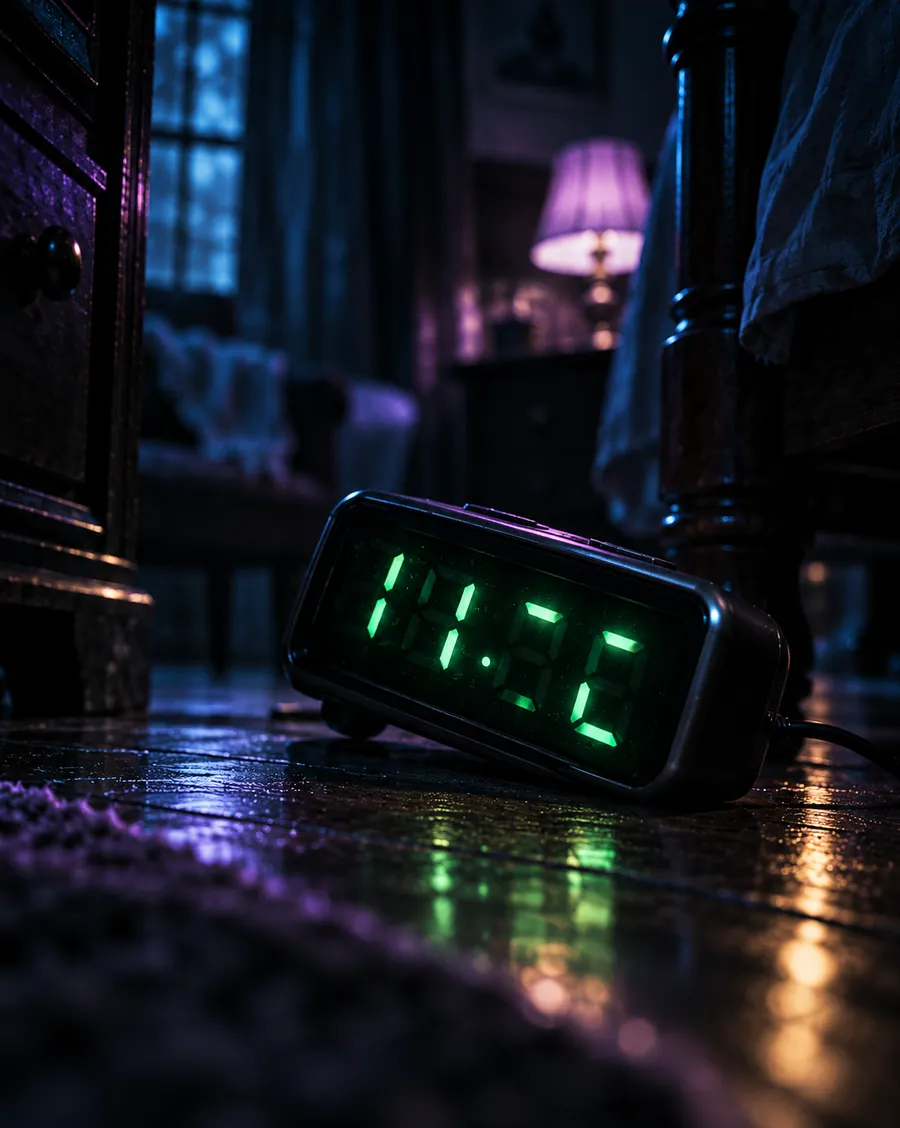
In the afternoon, an office worker named Miwa was stabbed to death in a room of a building. A digital clock lay on the floor at the scene.
In the photo taken by the police, the clock appears upside down (rotated 180 degrees), and the display looks like "10:51." The clock has a 7-segment display and had stopped. The police have concluded that it fell to the floor and stopped at the moment of the crime.
Miwa’s phone held a message: "Meet at 15:00."
There are three suspects: Hashimoto, who left the office at exactly 3:00 p.m.; Okada, who left at 2:50 p.m.; and Someya, who left at 3:10 p.m. It is a 5-minute walk from the office to the scene.
What time does the clock really show, and who could have reached the scene at that time?
If you get stuck, open the hints one at a time, in order.
If you rotate the digits by 180 degrees, how does each one look?
The order of the digits is also reversed.
Who could be at the scene at 3:01 p.m.?
What time does the clock really show, and who could have reached the scene at that time?
Choose the answer closest to the truth.
The upside-down 10:51 is 15:01, and Okada could have reached the scene
The answer is: the upside-down 10:51 is 15:01, and Okada could have reached the scene.
The clock fell and stopped at the moment of the crime, so the displayed time is the time of the crime.
On a 7-segment display rotated 180 degrees, 0 stays 0, 1 stays 1 and 5 stays 5, but the order of the digits reverses. Turned upside down, "10:51" becomes "15:01." The real time is 3:01 p.m.
It is a 5-minute walk from the office to the scene. The person who could be at the scene at 3:01 p.m. is Okada, who left at 2:50 p.m. (he arrives before 3:00). Hashimoto (left at 3:00) would arrive at 3:05 and Someya (left at 3:10) at 3:15, both too late.
You forget the premise that "it looked upside down" and read the digits in the photo as they are.
The cases on this site are fictional puzzles created for entertainment. Any resemblance to real people, organizations or events is coincidental.
© Unsolved Files